In Cedar Valley, Every Water Right Has a Birth Date. Why Cedar City Buyers Should Ask for It
When a listing in Cedar Valley says the property "comes with water rights," what year were those rights born?
Almost nobody asks that question, and in Cedar City it matters a great deal. Utah handles groundwater by seniority. In the Cedar City Valley, the dates when water rights lose the authority to pump, oldest rights last, are set out in the Cedar City Valley Groundwater Management Plan. A right filed after December 31, 1957 belongs to the first group scheduled to stop diverting, starting January 1, 2035. That date is a little more than eight years from today. A 30-year mortgage signed this fall would run past it and well into the plan's second phase.
So the useful question during due diligence is the right's priority date, and a plain "yes, it has water rights" doesn't answer it.
Adopted on January 11, 2021, the plan starts from a simple imbalance: the State Engineer estimates the basin's safe yield at 21,000 acre-feet a year, while average depletion runs about 28,000. If every approved or perfected groundwater right in the valley were fully used, depletion would reach roughly 50,000 acre-feet a year. The valley has issued far more paper water than the aquifer can supply.
The plan closes that gap by cutting off rights in order of age. Water rights "will be regulated according to priority and regardless of a water right's nature of use," and once a right's phase arrives, it "will no longer be authorized to divert water."
| Phase | Target date | Rights cut off if priority date is later than... | Time from October 2026 |
|---|---|---|---|
| 1 | January 1, 2035 | December 31, 1957 | About 8 years |
| 2 | January 1, 2050 | December 31, 1954 | About 23 years |
| 3 | January 1, 2060 | December 31, 1951 | About 33 years |
| 4 | January 1, 2070 | December 31, 1935 | About 43 years |
| 5 | January 1, 2080 | July 25, 1934 | About 53 years |
Each phase moves the cutoff back to an older date, so the pool of protected rights keeps shrinking. That is why the priority date tells a buyer more than the acre-foot figure on a right. Two rights of the same size can be filed a few years apart, one in 1953 and one in 1962, and still face cutoffs decades apart.
"Regardless of nature of use" carries weight in that sentence. A domestic right serving one house isn't exempt from the plan just because it serves one house. For buyers looking at acreage or a home on a private well outside city service, the date in the water right file belongs in the same early conversation as the survey and the septic inspection.
Cedar City's own planning shows how seriously the schedule is being taken. The city's Water Use and Preservation Element, adopted in December 2025, puts the water system's reliable source capacity at about 6,466 acre-feet a year. Existing demand is about 7,477.
The city holds plenty of rights on paper, about 15,900 acre-feet a year in additional water rights. The plan says many of those "are not considered to be a reliable supply because they will eventually be eliminated under the current management plan."
In other words, the city's planners count water by priority date, and junior rights aren't treated as supply. For a buyer, the practical step is to apply the same standard to any right attached to a property they're weighing.
The same logic is built into the price of new homes, even when it never shows up as a line item. In March 2026, the Cedar Valley Water Conservancy District said that under current policy "all new development," whether a home, a business, or a data center, must provide its own water. That water must come from the existing pool of rights, "which usually means purchasing them from a local agricultural producer."
The conservancy also describes water rights as private property and says it isn't the district's role to tell a farmer when to sell. Each new subdivision in the valley therefore traces back to water moving out of agriculture, which uses around two-thirds of local water according to district General Manager Paul Monroe. The more senior that agricultural water is, the more it's worth to the person converting it into home sites. Buyers comparing a finished lot with a raw parcel are comparing two very different water situations, even when the asking prices look close.
Ask about water in Cedar City and someone will mention the Pine Valley pipeline. The project cleared a major hurdle this year. On March 2, 2026, the BLM's Utah State Office issued a Record of Decision authorizing rights-of-way for up to 15 production wells and about 70 miles of pipeline. The pipeline would carry up to 15,000 acre-feet a year from Pine Valley in Beaver County to Cedar Valley. Three appeals followed. In May, the Interior Board of Land Appeals denied the requests to pause the project, and the appellants withdrew, so all three cases were dismissed by June 2, 2026.
The timeline is the part that matters for a buyer. The conservancy projects construction to begin in early 2029 and finish by mid-2032. The district has estimated the cost at about $260 million over a 40-year loan. As of March, the conservancy had "not yet changed policies" to let developers buy into the new supply.
The pipeline also doesn't rewrite the 2035 schedule by itself. The State Engineer can move a phase's cutoff to a later priority date, based on artificial recharge or reduced depletion over the ten years before the target date, and is supposed to report any adjustment each year. The plan also leaves room for water users to agree to a voluntary arrangement, and it says a successful import from Pine Valley could support that kind of agreement. Those are possible paths. They haven't been decided. Our research found no State Engineer notice that has moved any of the cutoff dates.
A closer source of relief is the valley's work to cut groundwater demand, which is exactly the kind of reduction the plan counts toward an adjustment. The conservancy finished phase one of a wastewater reuse project earlier this year. Phase one was a new treatment plant that cleans water from Cedar City's drains until it's safe for human contact. Phase two adds a pump station and pipeline, costs more than $11 million, and is expected to deliver recycled water by 2028. The reclaimed water will irrigate parks, schools, and other green spaces. Monroe told KUER that will free about 3,500 acre-feet a year, "about a third of the water that just Cedar City alone uses per year."
Monroe also explained why protecting the aquifer itself matters, beyond the volume of water in it:
"If they are to collapse, then you lose that storage — that ability to put water back in it."
Households play a part as well. Cedar City is eligible for the state's Utah Water Savers landscape program, which pays $2 per square foot of lawn replaced, up to $50,000 per application. Cedar City's single-family rates are also tiered. On the most recent schedule we could verify, from July 2025, the charge per 1,000 gallons rises from $1.00 in the first tier to $5.56 above 35,000 gallons a month. A large irrigated yard on city water costs more to run. For the valley as a whole, every acre-foot not pumped strengthens the case for a later cutoff.
The Cedar City Valley sits in Water Right Area 73, which the Division of Water Rights treats as fully appropriated. New uses have to go through change applications based on valid existing rights. A brand-new appropriation isn't available. Whatever water a property has today is effectively all the water it will be able to get through ordinary channels. That makes these checks worth doing early:
This is general education about how the system works and isn't legal advice. Any specific right is worth reviewing with the Division of Water Rights or a qualified water-rights professional before you rely on it.
If you're comparing lots, acreage, or homes on private wells around Cedar City and want help pulling water right files and reading priority dates before you write an offer, Tayler Christensen and the Christensen Team can walk through each property with you so the water question is answered before closing.

Cedar City
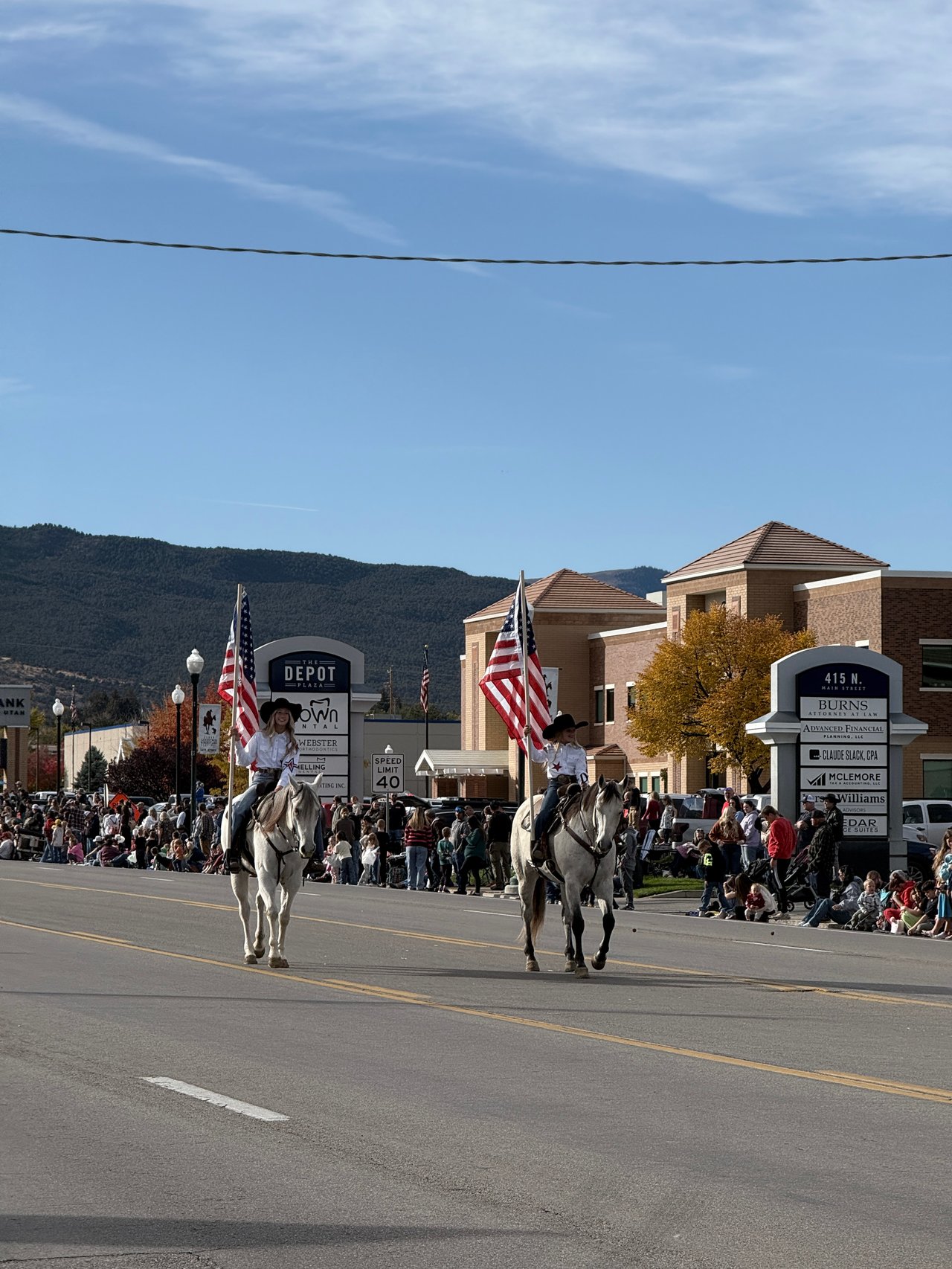
Experience one of Cedar City, Utah’s favorite fall traditions October 23–25, 2026, featuring the famous Sheep Parade, ranch rodeo, cowboy heritage, local vendors and f… Read more
Buying or selling a home is one of life’s most meaningful decisions, and having a trusted team by your side makes all the difference. With over 30 years of combined experience and deep ties to the Cedar City community, The Christensen Team offers thoughtful guidance and a highly personalized approach to every transaction. From strategy and negotiations to closing day, we ensure a smooth, seamless experience built on expertise, dedication, and proven results.

Donna Christensen
Tayler Christensen
Camry Miller
259 W 200 N Cedar City UT 84720