New Harmony Acreage: Comparing Water, Utilities, and Road Access
Two five-acre parcels go up for sale in New Harmony within the same month. Same price range. Same view of Pine Valley Mountain. Same word, "acreage," doing the same job in both listings. A buyer comparing them side by side sees two nearly identical numbers and assumes she's choosing between two nearly identical properties.
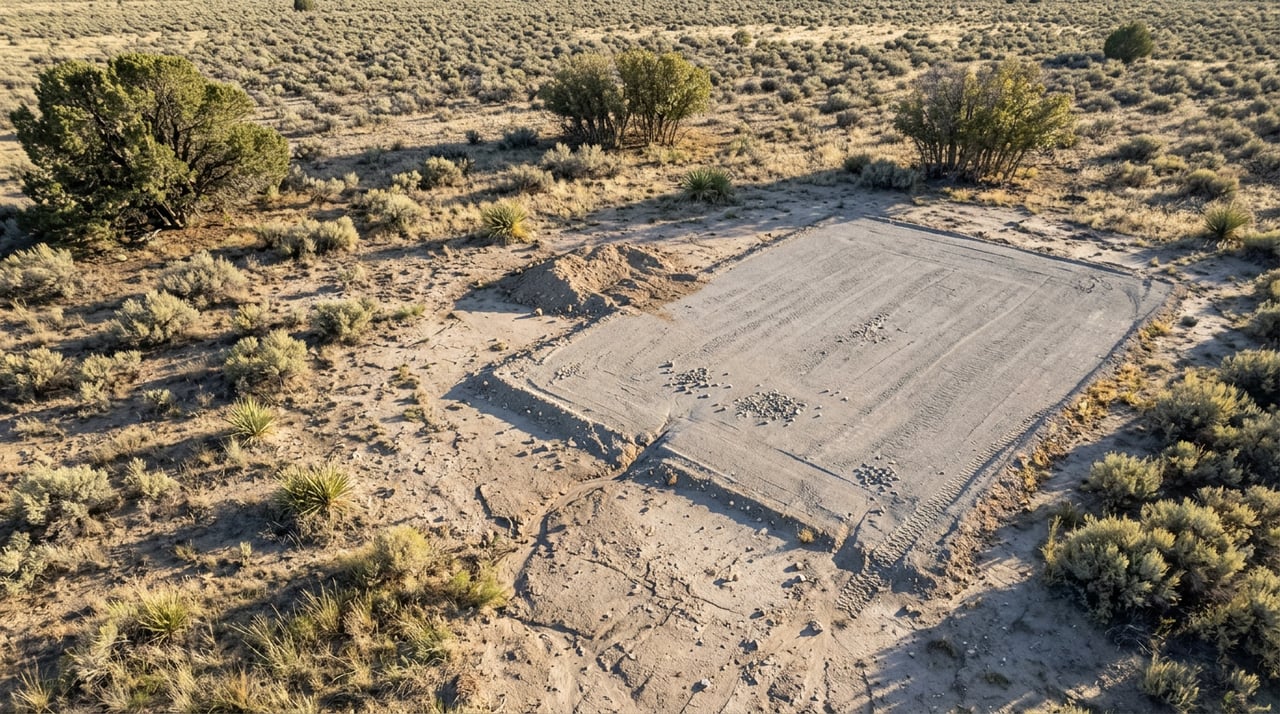
She isn't. One of those lots already has a share of water from a mutual company, natural gas, electricity, and a paved road maintained by the county. The other has none of that. It has a promise: power at the edge of the property. Both listings say "5 acres." Only one of them tells you what that actually costs to finish.
This is the part of New Harmony's land market that price-per-acre hides, and it's the part worth understanding before you fall in love with a number.
Active land listings around New Harmony this summer average roughly $80,000 per acre, based on current inventory across about 40 properties on the market. Home listings in town carried a median asking price of $1.24 million as of June 2026. Those two figures live in different worlds. A finished custom home reflects a completed set of decisions about water, power, and access. A bare lot reflects none of them yet, and the price you see is only the starting bid on a project whose true cost depends entirely on which of those decisions are already made.
Price-per-acre treats land as a commodity, as if one acre of New Harmony is interchangeable with any other. It isn't. The dirt is nearly the same everywhere in the valley. What differs, lot to lot, is what's attached to it.
Walk through actual New Harmony land listings and you'll see the split immediately. In Kolob Heights, lots come with natural gas, electricity, and water provided and maintained by the Washington County Water Conservancy District, with county-maintained paved roads already in place. A buyer there is purchasing a build-ready site. Elsewhere, in older acreage parcels and parts of Kolob Ranches, listings read differently: power at the property line, a well yet to be drilled, water rights whose acre-feet, priority date, and point of diversion the buyer should confirm before counting on them.
That second scenario isn't a red flag. It's simply a different, earlier stage of the same process, and it comes with real costs that a price-per-acre comparison never surfaces. For any New Harmony parcel where water isn't yet a done deal, the priority date of any water rights you're considering belongs in the conversation before the acreage does.
Before comparing two listings on price alone, it's worth confirming:
None of these questions show up in a listing photo. All of them show up in the closing costs.
New Harmony's rural character isn't an accident of geography. It's written into the county's zoning for the valley. The New Harmony Valley Overlay Zone requires that before a subdivision gets preliminary county approval, a water source has to be identified and proven through test wells, with well logs documenting depth and yield submitted to the county. Where individual wells serve individual lots rather than a shared system, the approved subdivision plat and the CC&Rs have to spell out exactly how a future building permit connects to water rights and well drilling on that specific parcel.
The same overlay requires percolation testing across the buildable area of every lot in a subdivision before it's approved, confirming the soil can actually handle a septic system at the flow rates a home will produce. That testing already happened, and passed, on some parcels. On others, it's still ahead of the buyer.
In practice, this means the fine print on a New Harmony plat isn't boilerplate. It's the actual roadmap for whether you can get a building permit on your timeline, or whether you're waiting on well logs and percolation results first.
The Washington County New Harmony community plan says the county doesn't fund subdivision road maintenance out of property taxes. It relies on state gas tax revenue, and the county maintains roads at whatever improvement level existed when the subdivision plat was originally recorded. If a developer platted a subdivision with dirt roads decades ago because that's what buyers wanted at the time, the county has maintained those as dirt roads ever since. Homeowners who want pavement don't get it automatically. They have to petition the county to form a special improvement district, which spreads the cost of the upgrade across residents over roughly a ten-year assessment period.
That single funding rule explains a lot about New Harmony's older, larger subdivisions. Blackridge Ranches, platted across 233 lots and roughly 1,470 acres, and Kolob Ranches, platted across 157 lots and about 709 acres, both predate a lot of the county's newer paved developments. Whether a given lot inside either of those subdivisions sits on a maintained paved road or a county-graded dirt road depends on which phase it's in and what that phase's original plat called for, not on how new or expensive the home built there might be.
| Subdivision | Scale | Typical Lot Size | What Typically Comes With the Lot |
|---|---|---|---|
| Blackridge Ranches | 233 lots across roughly 1,470 platted acres | Varies by phase | Mix of road conditions and water setups by phase; confirm plat-specific details |
| Kolob Ranches | 157 lots across roughly 709 platted acres | Varies by phase | Some phases carry mutual water company shares; others rely on private wells |
| Kolob Heights | Small, single-phase subdivision | Around 5 acres per lot | Natural gas, electricity, and water maintained by Washington County Water Conservancy District, with county-maintained paved roads |
| Kolob Ranch Estates | Small, single-phase subdivision | Around 5 acres per lot | Listings vary lot to lot between utility-stubbed parcels and well-and-septic parcels |
The table isn't a ranking. It's a reminder that "New Harmony land" isn't one product, and the subdivision name on a listing tells you less than the specific phase and lot number.
New Harmony is a small market, and small markets do strange things to median prices. Over a five-month stretch in 2025, recorded sales in the Kolob Ranch Estates subdivision, where lots typically run around five acres, moved from a median of $280,000 in June to $315,000 in August, then to $365,000 on a single October sale. Days on market across those sales ranged from 55 to 153, and lots sold at 91 to 95 percent of list price.
That's not a market heating up or cooling off. That's a subdivision with so few transactions that one unusually improved lot, one with utilities already stubbed instead of a well yet to be drilled, can swing the reported median by tens of thousands of dollars in a single month. Anyone reading a "New Harmony median" as a single, stable number is reading more precision into it than the transaction count supports. The number that matters is what's attached to the specific lot in front of you, not the average of a handful of very different sales.
Do all New Harmony lots come with water rights? No. Some come with a share in a mutual water company or service from the Washington County Water Conservancy District already in place. Others have water and well details to resolve before building.
If a subdivision has dirt roads now, will they stay that way? Likely, unless residents petition the county to form a special improvement district and agree to fund the upgrade themselves over time. The county maintains roads at the improvement level present when the subdivision was platted rather than upgrading them on its own.
Why do two similarly priced New Harmony lots sometimes have such different closing costs? Because the listed price reflects the land, not necessarily the water, power, and road infrastructure that comes with it. A lot with utilities already at the property line and a lot that still needs a well, septic system, and power trenched in can carry the same asking price and very different total costs to build.
If you're comparing New Harmony parcels and want someone to walk the plat, the water rights language, and the subdivision's road history with you before you make an offer, The Christensen Team has spent years sorting exactly this kind of detail out for buyers across Iron and Washington counties. Reach out, and let's start your journey with the questions that actually determine what you're buying.
This article is general information, not legal, tax or financial advice. Consult a qualified professional about your situation.
Cedar City
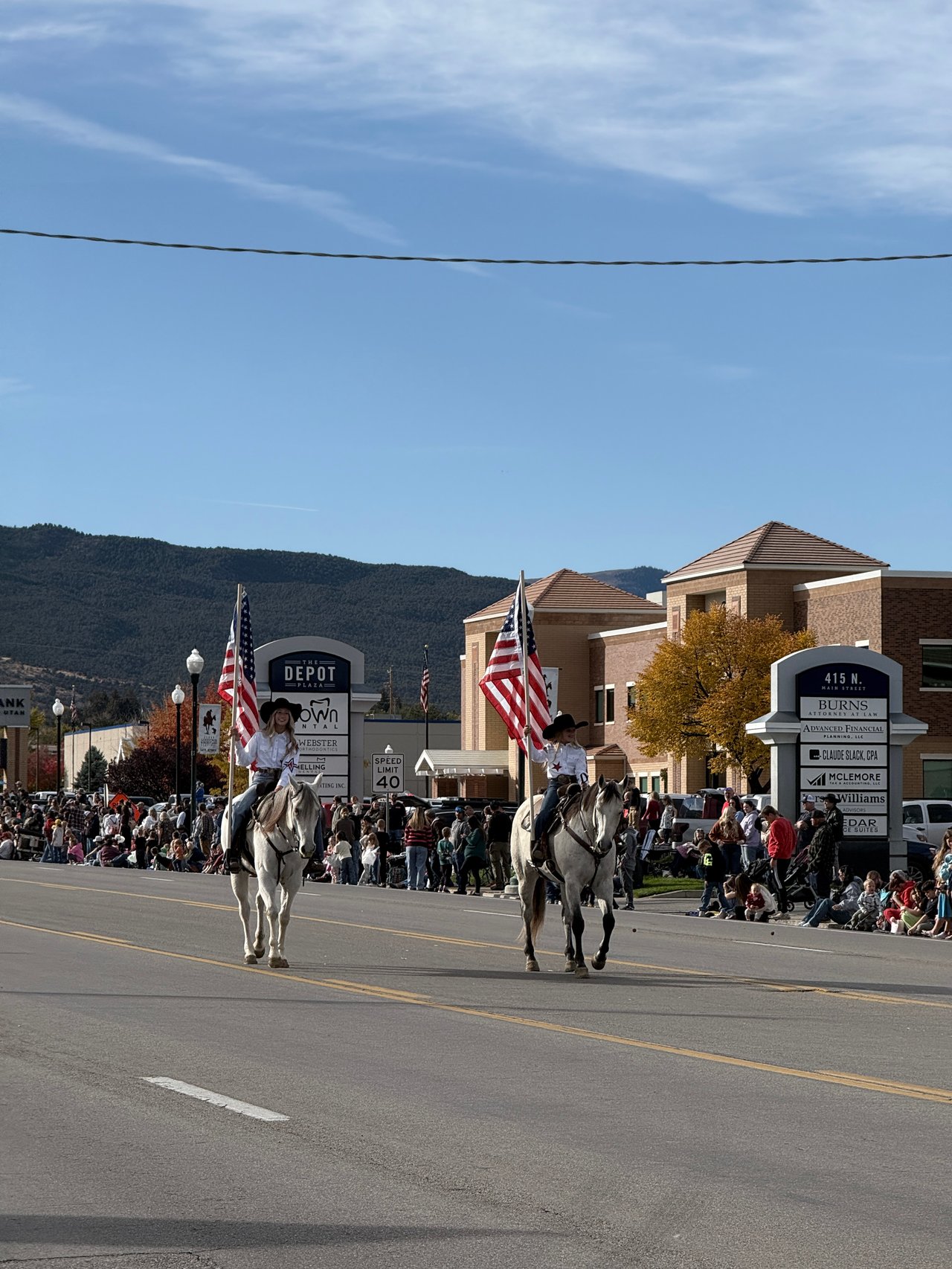
Experience one of Cedar City, Utah’s favorite fall traditions October 23–25, 2026, featuring the famous Sheep Parade, ranch rodeo, cowboy heritage, local vendors and f… Read more
Buying or selling a home is one of life’s most meaningful decisions, and having a trusted team by your side makes all the difference. With over 30 years of combined experience and deep ties to the Cedar City community, The Christensen Team offers thoughtful guidance and a highly personalized approach to every transaction. From strategy and negotiations to closing day, we ensure a smooth, seamless experience built on expertise, dedication, and proven results.
Donna Christensen
Tayler Christensen
Camry Miller
259 W 200 N Cedar City UT 84720