What's Under Enoch's New Subdivisions, According to the State
A geologic hazard study published by the Utah Geological Survey on May 5, 2026 did something most soils reports never do: it named a specific city. Covering Cedar Valley, the stretch of Iron County that includes Cedar City, Enoch, and Kanarraville, the study flagged earth fissures caused by groundwater-level decline as a growing concern, and it said so specifically about new developments in Enoch City. It also confirmed that collapsible soils and flooding have historically been the valley's costliest hazards, and that radon gas is locally prevalent enough to make indoor testing worth doing regardless of what the builder's own compliance check shows.
None of this makes Enoch a risky place to build. It makes the ground underneath Enoch's newest subdivisions something a buyer should ask about directly, in writing, before signing anything. Most people touring a spec home in Valley Gate Estates or a modern farmhouse going up in Spring Hill are comparing cabinet finishes and garage depth. The study is a reminder that the more consequential document sits earlier in the process, in a geotechnical report most buyers never think to request.
The UGS investigation was part of a pair of reports, the other covering Bryce Canyon National Park, both aimed at high-growth, high-visitation parts of southwestern Utah. Report author Tyler Knudsen framed the purpose plainly, saying the goal was to identify where these processes occur so risks to life and property can be managed proactively. For Cedar Valley specifically, the study pointed to two mechanisms worth understanding before you buy new construction here.
The first is collapsible soil, ground that holds its shape when dry but settles once it gets wet, whether from irrigation, a leaking gutter, or a wet winter. The second is earth fissures, ground cracks that form as groundwater levels decline under sustained pumping, and the study called these out as a growing concern tied specifically to new development in Enoch. Older statewide radon maps have generally rated Iron County on the lower end for radon potential. The new, more localized study complicates that a little, stating that radon gas is locally prevalent in the Cedar Valley area and that indoor testing is advisable. A wide-lens state map and a fine-grained valley study can both be right. The valley study is simply looking closer.
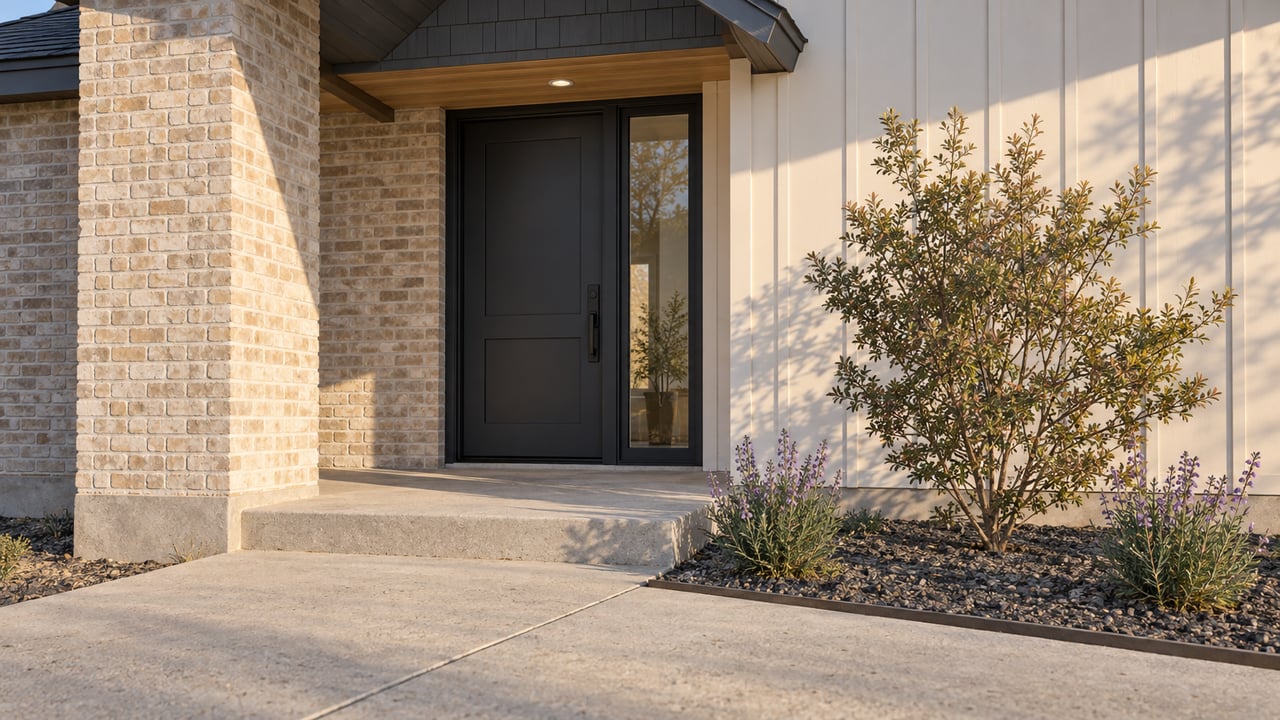
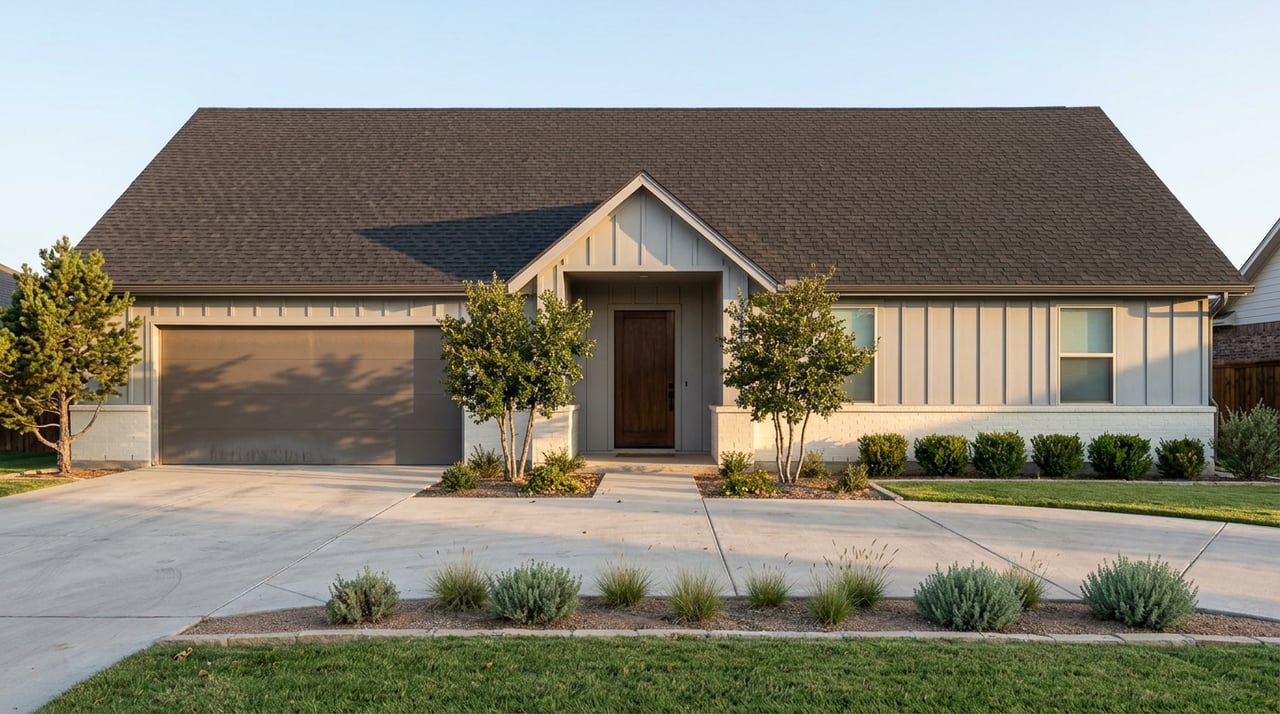
Enoch's construction pace has not slowed in response to any of this, and there is no reason it should. Valley Gate Estates continues to add new single-level and modern farmhouse plans, including recent listings for three-bedroom homes with open floor plans and attached two-car garages. Spring Hill Subdivision has newer construction sitting on larger lots, some approaching half an acre, marketed on the strength of views and space rather than density. Builders across these communities include Holyoak Homes and others working the same stretch of growing Cedar Valley ground that the UGS study just spent a year mapping.
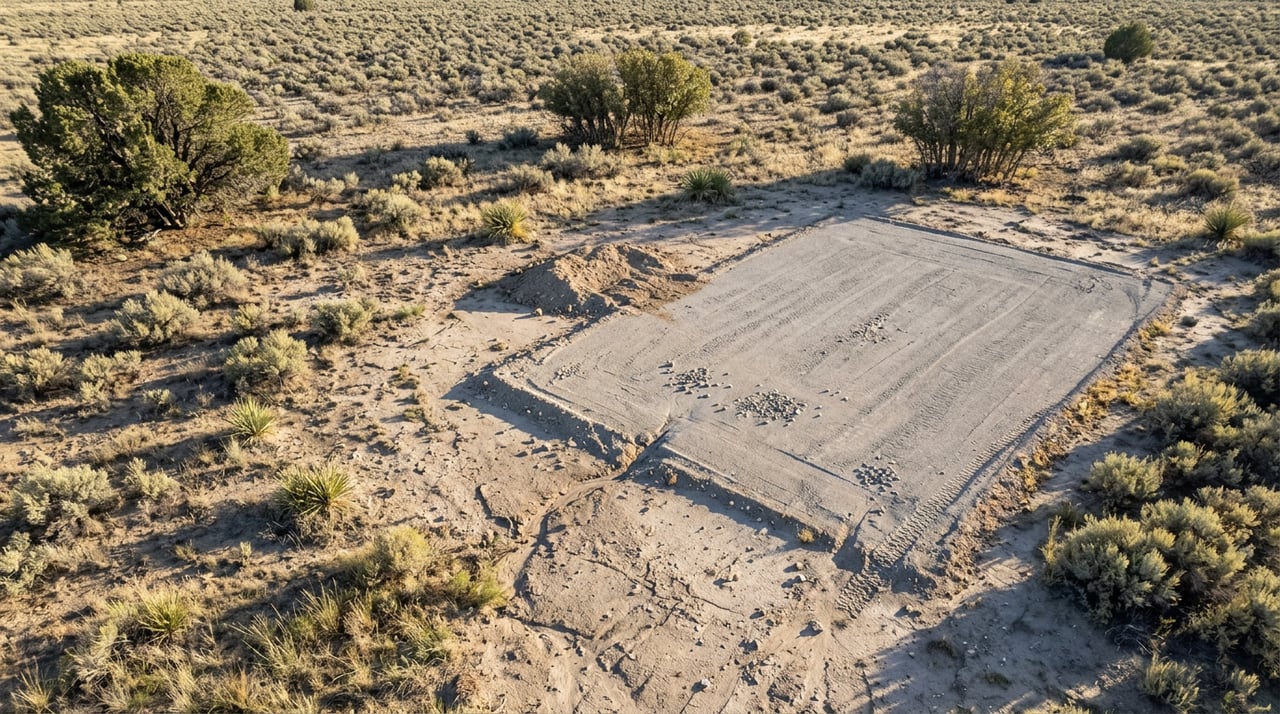
That overlap, active building on ground the state just flagged for collapsible soil and fissure risk, is exactly why the paperwork trail matters more here than it would in an older, more settled part of town. A lot that has already been built on, backfilled, and lived on for a decade has already shown you what it does in wet years. A lot in a subdivision still under construction has not.
Before a foundation gets poured, a reputable builder typically has a geotechnical or soils report on file, prepared by an engineering firm and filed with the local building department. That report specifies things like how deep the compacted fill needs to be, whether foundation drains are required, and what soil-bearing capacity the design assumes. It is a public-adjacent document in the sense that it was filed with the city, and a buyer is entitled to ask for it before writing an offer on new construction, not after moving in.
A lawsuit from Nephi, still to be decided, shows what is at stake when a report's recommendations become a point of dispute. Twenty-one homeowners in the Winn Ridge neighborhood, in homes built in 2022 and 2023, filed a lawsuit alleging their builders ignored a geotechnical report that had warned of
"moderate to high collapse potential"
in the neighborhood's soil. That report had called for six to ten inches of compacted fill beneath foundations along with foundation drains. The lawsuit alleges the builders instead placed loose twelve-inch lifts of fill and skipped the drains. The complaint describes drywall cracks around doors and windows, sloping floors, doors that no longer latch, and fissured basement floors letting radon into the homes. These are allegations, and the claims have not been proven.
Nephi is not Enoch, and nothing here suggests Enoch's builders have done anything similar. The Winn Ridge case is useful for a narrower reason than its headline. It shows what the recommendations in a geotechnical report look like in practice, in inches of fill and specific drainage requirements, and why a buyer benefits from reading them before closing. Asking to see the report, and asking again if it is slow to arrive, is a short conversation that puts those specifics in front of you early.
A new build gives you more chances to catch problems than a resale home does, but only if you use them at the right moment. Utah's standard sequence runs in three phases, and each one closes permanently once construction moves past it.
| Phase | Timing | What It Catches | Typical Cost |
|---|---|---|---|
| Pre-drywall | After framing, plumbing, and electrical rough-ins, before insulation and drywall go up | Framing, wiring, plumbing rough-ins, HVAC ductwork, structural anchoring, while it's still visible | $400 to $750 |
| Final walkthrough | Before closing | Finishes, fixtures, appliances, confirms earlier items were corrected and systems function | $250 to $400 |
| 11-month warranty | Before the one-year builder warranty expires | Settlement cracks, drainage issues, seasonal defects that only surface after a full year of weather | $500 to $900 |
The pre-drywall inspection matters most for exactly the kind of issue the UGS study raises. Foundation drains, grading, and rough plumbing are all visible at that phase and all permanently hidden the moment drywall goes up. A municipal code inspector will check the same items for minimum compliance, but that inspection is about meeting code, not about protecting your specific investment. An independent inspector working for you is a different set of eyes with a different incentive.
Most new-construction builders back their work with a one-year workmanship warranty, and many enroll homes in third-party structural warranty programs, such as the one administered by 2-10 Home Buyers Warranty, which is a member of the Home Builders Association of Utah. These programs typically require an engineering, soil, or state inspection before a home can even be enrolled, which is itself a signal that soils conditions are taken seriously industry-wide, not just in response to one state study.
The practical takeaway is timing. Schedule your own inspection near the eleventh month, not the twelfth. That gives you a documented list of issues while the builder is still contractually obligated to address them, rather than after the warranty has lapsed and repairs become yours to pay for. Order an independent radon test as part of that same visit. A builder's own compliance check is not the same as a radon test run by a homeowner who has read a state study naming their own valley as an area of local radon prevalence.
The 2026 Iron County Festival of Homes ran September 4 through 7 and again September 11 through 13, presented by the Iron County Home Builders Association and State Bank of Southern Utah. Rose Bradley Homes showed an under-construction home at Iron West, and Choice Builders, fresh off a 2025 Judges' Choice Award, returned with a new entry. The event is a self-guided tour through occupied or nearly finished homes, which means it is also one of the only times a buyer can walk a builder's actual work before signing anything.
For anyone touring next year's Festival, or any model home in the meantime, the question worth asking a builder directly is not about finishes. It is whether they can produce the geotechnical report for that specific lot, and whether the home is enrolled in a third-party structural warranty program. A builder who can answer both promptly gives you a clear starting point for the rest of the process.
Does every new home in Enoch need a radon mitigation system? Not automatically. The UGS study says radon is locally prevalent enough to make testing advisable, not that every home tests high. A radon test after move-in, or a pre-installed passive system that a builder can activate if needed, are both reasonable ways to handle the uncertainty without assuming the worst.
Who is responsible for getting the geotechnical report, the buyer or the builder? The builder or the developer typically commissions the geotechnical report as part of the permitting process, and it gets filed with the local building department. As a buyer, your job is to ask for a copy before you're under contract, not to commission your own unless you want a second opinion on a specific concern.
Buying new construction in a growing part of Enoch is still one of the more straightforward paths into Southern Utah homeownership, and none of this changes that. It just means the paperwork worth asking for isn't the one the builder hands you at closing. If you're comparing lots or subdivisions in Enoch and want help reading a geotechnical report or timing your inspections around a build schedule, The Christensen Team can walk that process with you before you sign, not after.
Cedar City
Experience one of Cedar City, Utah’s favorite fall traditions October 23–25, 2026, featuring the famous Sheep Parade, ranch rodeo, cowboy heritage, local vendors and f… Read more
Buying or selling a home is one of life’s most meaningful decisions, and having a trusted team by your side makes all the difference. With over 30 years of combined experience and deep ties to the Cedar City community, The Christensen Team offers thoughtful guidance and a highly personalized approach to every transaction. From strategy and negotiations to closing day, we ensure a smooth, seamless experience built on expertise, dedication, and proven results.

Donna Christensen
Tayler Christensen
Camry Miller
259 W 200 N Cedar City UT 84720