Three Peaks Recreation Area near Enoch: Five Places to Explore
Drive west on Midvalley Road on any Saturday morning in August and you will pass trucks pulling horse trailers, Jeeps with their doors already off, a minivan with two mountain bikes strapped to the back, and someone's sedan parked at a gravel pullout with a disc golf bag slung over one shoulder. All of them are headed to the same place. Almost none of them are headed to the same spot within it.
Three Peaks Recreation Area sits just northwest of Enoch on more than 6,000 acres of Bureau of Land Management ground, and most residents who have lived here a few years assume they know it because they have been there once or twice. What usually happened is they found one gravel lot, did one loop, and never noticed that Three Peaks is not really one place. It is five separate staging areas sharing a single boundary, and which one you park at determines almost everything about your afternoon.
The directions alone tell the story. If you are heading to the main OHV staging area, the BLM's own routing takes you off I-15 at exit 59, west on UT-56, then north on Lund Highway before you turn onto Midvalley Road from the south. That lot has a pavilion, a picnic table, and a wheelchair-accessible vault toilet, and it is the jumping-off point for 42 miles of OHV and ATV routes, from flat two-track to genuine hill climbs.
But if you are riding a mountain bike, the standard directions send you off I-15 at exit 62 instead, north toward Minersville, then west on Midvalley Road for a full six miles past a welcome-area turnout before a separate sign points you down a gravel spur to the actual bike trailhead. Same recreation area. Different highway exit. Different lot entirely.
Keep driving west past the main OHV entrance and you will find a third gravel road leading to a parking area with its own bathroom and a practice basket, which is where the two disc golf courses start. Go further still and there is a fourth staging area built for horses, with corrals, water, and a covered picnic table. And tucked at the far western edge is a fifth: the Iron County Shooting Range, split into a long range and a short range, largely separate from everything else on the property.
If you have only ever parked at one of these, you have seen a fraction of what your own backyard offers. The five don't overlap much, and locals who treat Three Peaks as a single trailhead tend to keep doing the same loop every time, simply because they never found the turn to anything else.
The bike trail system itself is the part regulars talk about most, and for a specific reason: the rock. Three Peaks sits on fine-grained pink granite, and riders who spend time on both this terrain and Utah's more common sandstone consistently say the granite grips differently. It holds traction well enough that moves which would slide out on sandstone hold firm here, which is part of why the technical sections draw riders from well outside Iron County.
The trail system links named loops and connectors. The Practice Loop is the entry point, short and forgiving. From there, riders fork onto the Race Course Loop or Big Hole Loop for longer intermediate mileage, and advanced riders push out to Lost World or take the newer Twilight Zone connector into the technical southeast corner known locally as the Whale Trails, home to the rock formations nicknamed the Petrified Whales. Trail mileage estimates vary depending on which connectors you count, with local guides putting the full network anywhere between 19 and 27 miles, which is itself a useful thing to know before you commit to a loop you assumed was short.
Elevation runs from around 5,800 feet at the trailhead to about 6,150 feet on the high points of the loop rides, which is not a dramatic gain, but it is enough that the granite bakes hard by midday in August. Riders who have been doing this for years tend to start early and be off the rock before the heat sets in, which is less about comfort and more about the fact that granite radiates what it absorbs.
Along the Big Hole Loop, one trail marker known simply as the Voodoo Tree has accumulated old road bike parts, a helmet, a plastic skull, and what riders describe as scattered cow parts, the kind of thing a trail crew builds over years, not a season.
That detail matters more than it sounds. It is a sign the trail system was built and maintained by the people who ride it, not laid out once by a contractor and left alone.
Past the main entrance, the disc golf lot splits into two full 18-hole courses that share a parking area but play entirely differently.
| Course | Holes | Par | Distance | Notes |
|---|---|---|---|---|
| Three Peaks Course | 18 | 61 | roughly 7,280 to 7,939 ft depending on tee | Longer holes, blind drives, baskets set into rock outcrops |
| Ironside | 18 | 60 | about 6,810 ft | Double baskets on every hole, so it plays as two courses in one |
Ironside was built in 2016 and designed by Cam Findlay and Ben Joslin, and the double-basket format is unusual enough that it shows up in tournament listings specifically because of it. Local players sometimes recognize Findlay's name from somewhere other than the course itself: a Cameron Findlay currently serves on Enoch City's Recreation Advisory Board, the same body that weighs in on how the city funds its parks and rec programs. Whether that overlap comes up in conversation or not, it says something about how small the loop is between the people who build Enoch's recreation infrastructure and the people who use it.
If you want to try the courses before buying your own set of discs, Cedar Sports and Cedar Cycle in downtown Cedar City both rent gear.
Past the disc golf lot and the equestrian staging area, the far western edge of the property holds the Iron County Shooting Range, with a long range and a short range operating somewhat independently from the rest of Three Peaks. The same general area hosts organized 4x4 rock crawling competitions several times a year, drawing a crowd that has little overlap with the bikers or the disc golfers elsewhere on the property.
There is also a radio-controlled car track and a model airplane flying field, and a 19-site campground with fire rings and flush-toilet restrooms. As of the most recent listings, no camping fee is charged, which for a property this size and this close to town is unusual enough to be worth knowing if you have never camped somewhere close enough to reach on a weeknight after work.
Local trail guides generally describe the mountain bike season as running from March through December, weather permitting, while the more specific ATV route is typically framed as an April-through-October ride. Mid-August sits squarely inside both windows, which means right now is close to peak season for every activity on the property at once, and also the point in the year when the granite runs hottest by early afternoon.
If you have not been out to Three Peaks since spring, this is the stretch where all five corners of the property are running at full capacity simultaneously, which also means the parking situation at whichever lot you choose will be tighter on weekend mornings than it was in April.
Three Peaks is Enoch's wild edge, but the town's other rhythm plays out closer to home. Every summer, Old Enoch Park at 1700 E 5250 N hosts the city's Fourth of July gathering, with a 5K that starts and finishes at the park, a parade running from Enoch Elementary School down to 451 E Midvalley Road, live music from the Enoch Orchestra, a showcase of vintage vehicles from the Antique Car Club, and a book and bake sale run by the local library's Friends group. It is a small, in-town event that could not be more different from what happens ten minutes away on BLM land.
That contrast is the point. Enoch residents get both: a quiet, walkable town center with a park most people already know, and a genuinely wild 6,000-acre backyard most people have only sampled a corner of. Knowing which lot to park at is the difference between repeating the same loop for years and actually using what is out there.
If you are weighing whether Enoch's mix of small-town rhythm and open BLM ground fits what you want out of your next home, The Christensen Team knows this area block by block and is happy to talk through what life here actually looks like day to day.

Cedar City
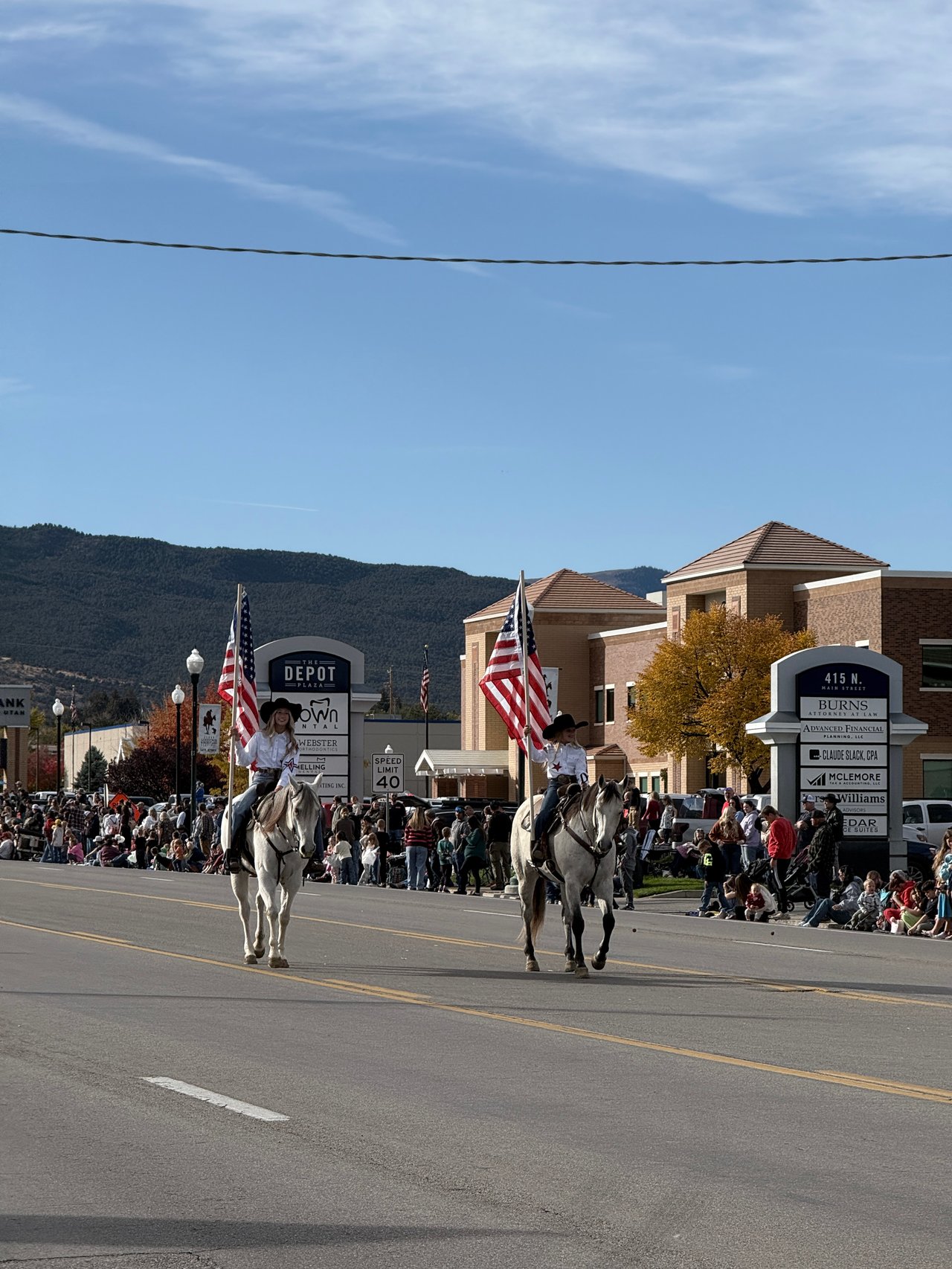
Experience one of Cedar City, Utah’s favorite fall traditions October 23–25, 2026, featuring the famous Sheep Parade, ranch rodeo, cowboy heritage, local vendors and f… Read more
Buying or selling a home is one of life’s most meaningful decisions, and having a trusted team by your side makes all the difference. With over 30 years of combined experience and deep ties to the Cedar City community, The Christensen Team offers thoughtful guidance and a highly personalized approach to every transaction. From strategy and negotiations to closing day, we ensure a smooth, seamless experience built on expertise, dedication, and proven results.

Donna Christensen
Tayler Christensen
Camry Miller
259 W 200 N Cedar City UT 84720