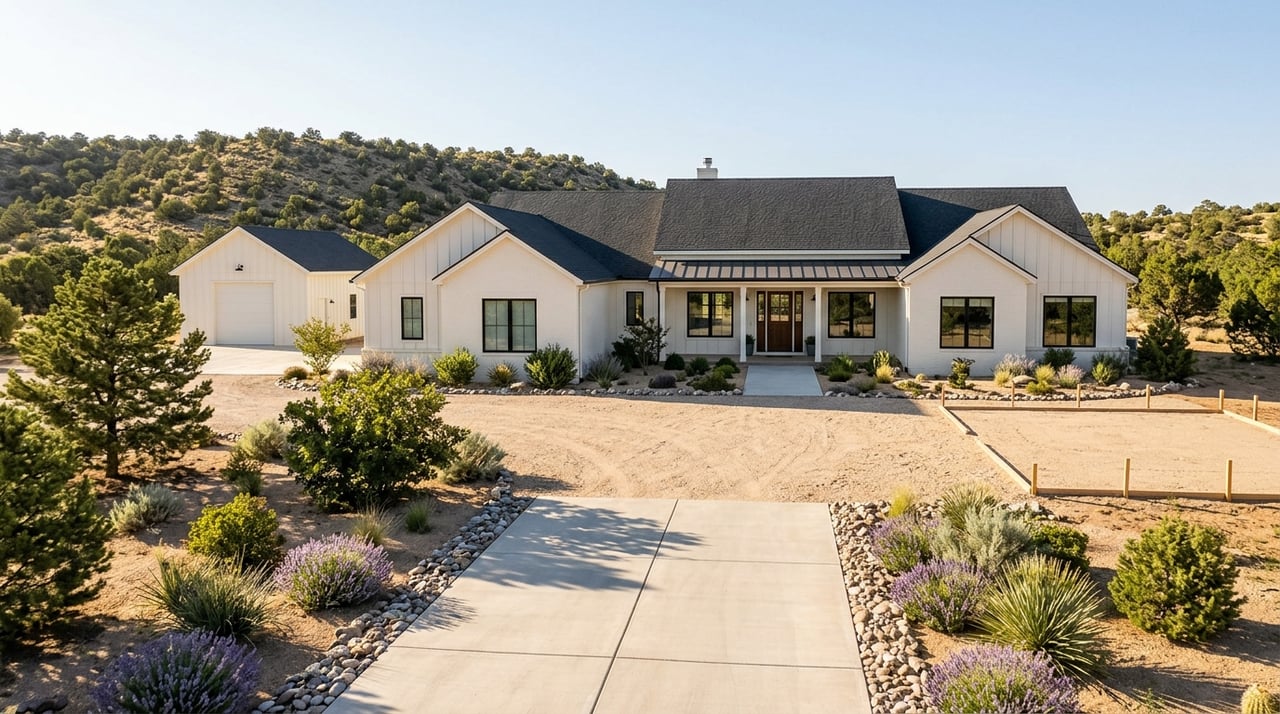
Purchasing Land Or A Second Home In New Harmony Step-By-Step
Thinking about buying land or a second home in New Harmony? It can be an exciting move, but it is also the kind of purchase where small parcel details can shape everything from financing to building plans. If you want to avoid surprises, you need a clear step-by-step approach. Let’s dive in.
In New Harmony, the first question is not just how much a property costs. It is whether the parcel can support what you want to do with it.
The town uses several zoning categories, including rural-residential districts such as RR-.5, RR-1, RR-2, and RR-5, along with Residential Agricultural, Agricultural, Open Space, and Restricted Development overlay zoning. That means two properties in the same area may have very different rules for lot size, use, and buildability.
If you are buying land, start by confirming the parcel’s exact zoning and minimum lot requirements. If you are buying a second home, you still want to understand whether there are any use limits that could affect future plans.
Your intended use should guide your search from day one. If you hope to build, add guest accommodations, or use the property for occasional short-term stays, zoning and approval paths matter before you make an offer.
New Harmony’s local approvals run through the town council and planning commission, and the town maintains its own roads and water system. That local structure makes it especially important to understand whether your plans will need town review before construction or a change of use.
Before you move too far into financing or negotiations, be clear about the type of purchase you are making. Buying a finished second home is very different from buying raw land.
A second home under Fannie Mae guidelines must be a one-unit dwelling, suitable for year-round occupancy, occupied by you for part of the year, and kept under your exclusive control. It cannot be a timeshare, a rental property, or subject to a management-control agreement.
That definition matters because raw land is not a second home. If the property is just a parcel with no dwelling, you will need a different financing conversation than you would for a completed home.
Some buyers hope to enjoy a second home personally and rent it occasionally. In New Harmony, bed-and-breakfast, vacation rental, and tourist home uses are treated as short-term dwelling uses in the town ordinance.
In rural-residential and residential-agricultural districts, those uses are conditional uses. The ordinance also requires town registration, owner or manager residency, off-street parking, posted town rules, no more than four guest rooms, and occupancy limits of no more than two guests per bedroom or eight total guests.
That means you should never assume short-term rental use is automatic. It depends on the parcel’s zone and whether the property can meet the town’s conditions.
Utilities are not a minor detail in a rural purchase. In New Harmony, proposed buildings or uses within town limits must connect to an approved water system and an approved individual septic system or sanitary sewer system.
For land buyers, this is one of the biggest reasons to slow down and verify facts early. A parcel may look ideal on paper, but your building timeline and budget can change quickly if water or septic approvals are unclear.
Washington County’s legal-building-lot checklist gives a practical roadmap. Buyers should look at access, water, septic feasibility, power, and fire-suppression planning, along with whether the lot meets zoning minimums and qualifies as a legal building lot.
For new homes, county permit documents call for proof of water, an approved septic permit from Southwest Utah Public Health Department, a geotechnical report or data sheet, and a site plan showing access, frontage, parcel size, septic layout, and distances to property lines.
Utah’s onsite wastewater process treats septic as its own approval path. The Washington County Water Conservancy District’s single-lot process also includes district review, septic permitting, final certification, and then county community development for the building permit.
If a parcel depends on its own water supply, there are more layers to check. Utah DEQ states that systems developing their own source must show adequate water rights, water chemistry, source yield, and source protection from concentrated pollution.
That is why land due diligence in New Harmony is often more detailed than a standard resale purchase. You are not just evaluating a location. You are evaluating whether the property can function the way you need it to.
A beautiful parcel still needs legal and practical access. Washington County’s checklist notes that approved access can be through a public road, private road, or a perpetual ingress and egress easement at least 25 feet wide.
This is one of those details that can affect both financing and future building plans. If access is not properly established, everything else can become harder.
You also want to confirm whether the lot was created or modified after July 1, 1992, and whether it meets current zoning minimums. That helps determine whether the parcel is recognized as a legal building lot.
Financing should match the asset you are buying. A finished second home and a vacant parcel do not follow the same lending path.
If you are purchasing a second home, lender guidelines will generally focus on occupancy, property type, and whether the home is suitable for year-round use. If you are buying land, you should expect a separate financing discussion built around the parcel rather than a completed dwelling.
USDA single-family housing programs are for primary residences, not vacation homes. They also require borrower occupancy as a primary residence and are not designed for income-producing vacation properties.
For some buyers, that helps narrow the loan conversation quickly. If your goal is a second home in New Harmony, USDA financing is not the usual fit.
Your long-term ownership costs may look different for a second home than for a primary residence. In Utah, the primary residential exemption applies only to a primary residence.
According to the Utah State Tax Commission, a second residence or unoccupied residential property is taxed at 100 percent of fair market value. If you are comparing a primary move to a second-home purchase, that tax distinction is worth building into your budget early.
With a New Harmony land or second-home purchase, price is only one piece of the deal. The stronger strategy is usually to structure the contract around the approvals and verifications that matter most.
For land or rural-property purchases, contingencies often need to cover zoning confirmation, legal access, water, septic feasibility, title review, and lender approval. That approach follows the local approval path instead of treating the purchase like a simple in-town resale.
Washington County accepts building permit applications electronically, but approvals still take time. Buyers should plan for extra steps when a purchase depends on county review, utility certification, septic permitting, or town-level questions.
That extra time is not necessarily a problem. It is simply part of buying wisely in an area where parcel-level details matter.
Rural and land closings often involve more than a deed and a signature. Easements, legal descriptions, parcel IDs, and recorded documents all need to be handled correctly.
Washington County’s recorder requires recorded documents to include a legal description, notarization, original signatures, and the parcel’s tax ID. The office also does not accept recordings after 4:45 p.m. Mountain Time, which can affect closing-day timing.
That may sound small, but details like this can help your closing stay smooth and avoid last-minute delays.
The best New Harmony purchases usually begin with clarity, not speed. Whether you are buying land for a future custom home or looking for a second home in Southern Utah, the right path starts with zoning, utilities, access, financing, and approvals.
This is where local guidance can make a real difference. When you understand the parcel before you fall in love with the view, you put yourself in a much stronger position to buy with confidence.
If you are exploring land, building lots, new construction, or a second home in New Harmony, Tayler Christensen can help you sort through the details and move forward with a clear plan.

Cedar City
Experience one of Cedar City, Utah’s favorite fall traditions October 23–25, 2026, featuring the famous Sheep Parade, ranch rodeo, cowboy heritage, local vendors and f… Read more
Buying or selling a home is one of life’s most meaningful decisions, and having a trusted team by your side makes all the difference. With over 30 years of combined experience and deep ties to the Cedar City community, The Christensen Team offers thoughtful guidance and a highly personalized approach to every transaction. From strategy and negotiations to closing day, we ensure a smooth, seamless experience built on expertise, dedication, and proven results.
Donna Christensen
Tayler Christensen
Camry Miller
259 W 200 N Cedar City UT 84720