How Infrastructure Fees Shape New-Construction Prices in Enoch
Pull up two new-construction listings in Enoch right now with similar square footage, similar finishes, similar lot size, and you will likely see two different prices. The floor plans might even come from the same builder catalog. The gap has less to do with quartz countertops than with which subdivision the lot sits in, and more specifically, which generation of city infrastructure that lot is paying into.
One might be in Dairy Glen. Another might be in Spring Hill, a newer subdivision where recent listings sit on lots as large as roughly half an acre. A third option coming soon will sit inside the newly approved Swiss Development, a 279.54-acre mixed residential and commercial project the Enoch City Council adopted a development agreement for on July 1, 2026. Same city, same school district, same general commute to Cedar City. Different cost structure underneath the price tag.
Anyone shopping Enoch has already found the median. Over the three months ending June 2026, the median sale price landed around $447,000, up about 2.7 percent from the same period a year earlier. Looked at on its own, that reads as a market holding steady with modest appreciation, the kind of number that suggests nothing unusual is happening.
What that median doesn't say is how long it took to get there. Over the same window, homes in Enoch were taking an average of 77 days to sell, compared to 48 days a year earlier. That is not a small shift. Days on market nearly doubling while price barely moves is not a market standing still. It is two forces pulling in opposite directions and landing close to a wash: rising underlying costs pushing price up, and softer buyer urgency pushing time-to-sale out. A buyer who reads only the median misses the part of the story that actually explains what is happening on the ground.
The reason costs are rising has nothing to do with speculation or a hot resale market. It has to do with pipes, wells, and a city that is growing faster than its 2017-era infrastructure was built to handle.
Enoch's own engineering analysis, prepared for the city's culinary water impact fee plan, projects population growing from approximately 8,461 residents in 2024 to nearly 12,000 by 2034. A separate wastewater presentation to the City Council in January 2026 used a 3.5 percent annual growth rate to project the city reaching roughly 12,785 residents by 2036. The exact numbers differ slightly depending on which report you read, but the direction is the same: this is a city adding residents faster than its water and sewer systems were sized for.
The wastewater side already shows strain. City engineers told the Council in January that three sections of the current sewer system have approached capacity, with more sections expected to hit their limit within the ten-year planning window. Their fix is a parallel 24-inch trunk line running alongside the existing 18-inch line, priced at $8,427,952.23 and rated 100 percent eligible for impact fee funding, meaning new construction is expected to cover the entire cost.
The water side tells a similar story with a similar price tag. A 2025 update to the city's culinary water plan identified new source wells, a chlorination building, and a new booster station as 100 percent growth-related capital needs, totaling $18,995,925 in growth-eligible cost. The same analysis calculated an equity buy-in value, the price new connections effectively pay to access water infrastructure that already exists, at $39,287,685.66 divided across the city's current 2,717 equivalent residential connections. Do that math and the buy-in piece alone works out to roughly $14,450 per new connection, before any share of the new capital projects gets added on top.
A separate, earlier planning document had already put a ceiling on how high the total water impact fee could legally climb: $30,227.81 per equivalent residential connection, described in that analysis as the maximum legally defensible amount under state law. The plan set the range everyone, including builders, has been pricing against.
This stopped being a theoretical range on May 20, 2026, when the Enoch City Council passed Ordinance No. 2026-05-20-A, amending the water impact fee. New construction in Enoch is no longer pricing against an older fee schedule. It's pricing against one tied directly to the 2025 update's cost of wells, booster stations, and buy-in value.
The fee conversation isn't limited to residential rooftops either. At a July 1, 2026 Council meeting, a local business owner pushed back on a $25,777 transportation impact fee she felt was disproportionate for a small, locally owned operation, and asked whether the fee calculation actually reflected her business's traffic impact. The city's building inspector explained how transportation fees are assessed. The exchange is a useful reminder that impact fees in Enoch are not a settled, background detail. They are actively being applied, questioned, and in some cases adjusted, in real meetings happening this year.
This is the part that explains the price gap between listings that otherwise look identical.
| Subdivision | What it offers | What it's paying into |
|---|---|---|
| Dairy Glen | Older subdivision | Existing, already-built infrastructure the city has largely amortized |
| Spring Hill | Newer subdivision, recent listings on lots up to about half an acre | A newer platted phase |
| Swiss Development | 279.54 acres, mixed residential and commercial, development agreement adopted July 1, 2026 | The newest generation of infrastructure funding |
The widening gap between flat prices and slower days on market is not a warning sign. It's a window. Builders are absorbing rising fee costs at the same time buyer urgency has softened, and that combination tends to produce more room for negotiation on lot premiums, upgrades, or closing cost credits than a headline median price would suggest.
The practical move for anyone comparing two new-construction options in Enoch is to ask directly which fee schedule applies to the specific lot, not just the subdivision name. That single question does more to explain a price difference than any comparison of cabinet finishes or garage size.
Does a higher impact fee mean a home is overpriced? Not necessarily. It means part of the price is funding infrastructure that didn't exist before, water source capacity and sewer trunk lines the whole area will eventually rely on. The question worth asking is whether that cost is transparent in the builder's pricing or buried in it.
Why do some Enoch subdivisions emphasize amenities? Older platted subdivisions built before the current growth wave often connected to infrastructure the city has already paid down, which is part of why they can compete on lower carrying costs. Newer master-planned communities are typically funding the current round of capital projects and often build amenities into the price to match.
Is the slower days-on-market trend likely to continue? Impact fee amendments tend to lag population growth by design. With Enoch's population still climbing and the May 2026 fee amendment now in place, the cost side of new construction is more likely to keep rising than to reverse in the near term.
If you're weighing a specific lot or subdivision in Enoch and want a straight answer on which fee generation it falls under, The Christensen Team can walk through it with you, lot by lot, before you make an offer. Start Your Journey with a conversation, not a guess.
This article is general information, not legal, tax or financial advice. Consult a qualified professional about your situation.
Cedar City
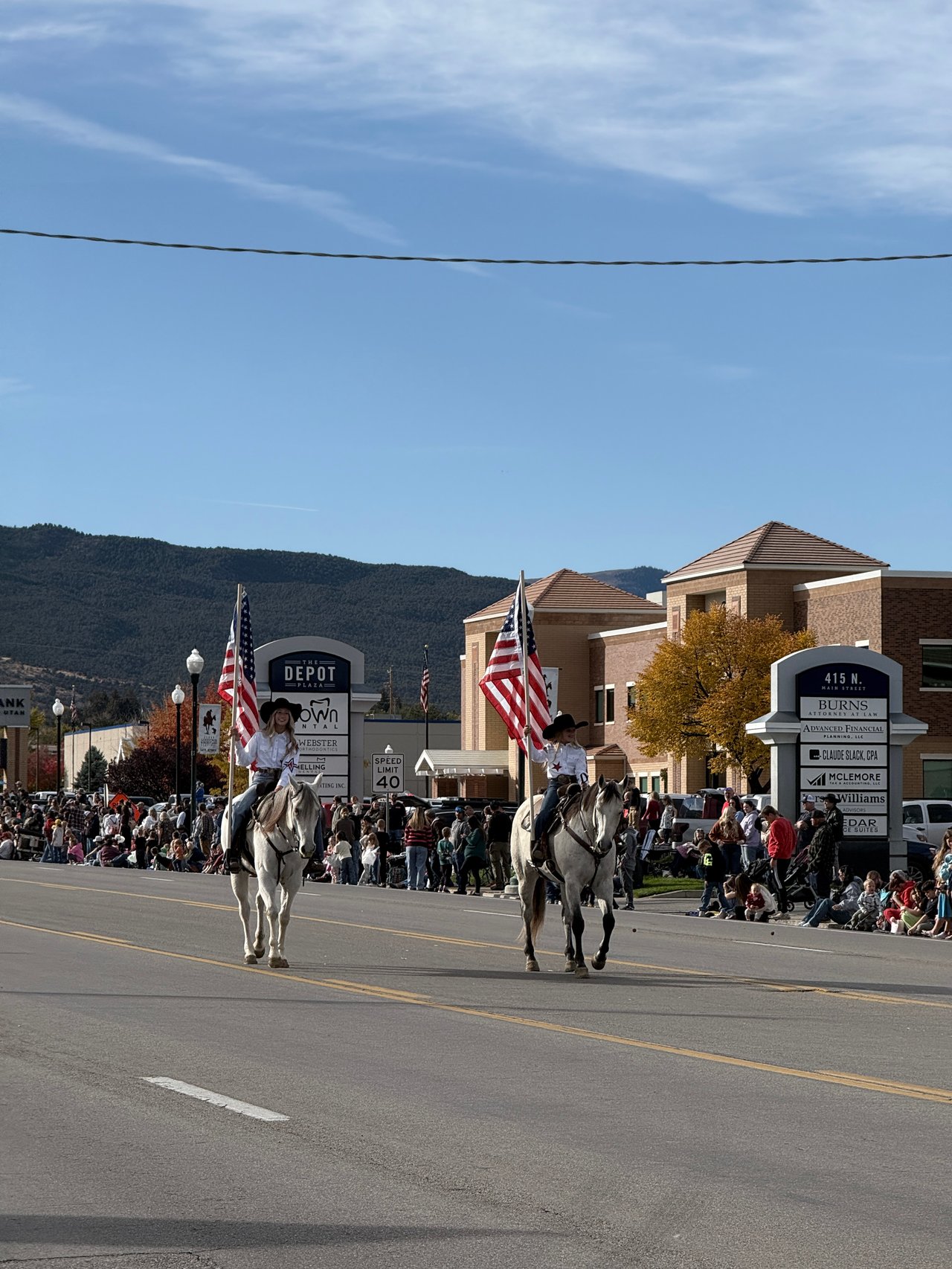
Experience one of Cedar City, Utah’s favorite fall traditions October 23–25, 2026, featuring the famous Sheep Parade, ranch rodeo, cowboy heritage, local vendors and f… Read more
Buying or selling a home is one of life’s most meaningful decisions, and having a trusted team by your side makes all the difference. With over 30 years of combined experience and deep ties to the Cedar City community, The Christensen Team offers thoughtful guidance and a highly personalized approach to every transaction. From strategy and negotiations to closing day, we ensure a smooth, seamless experience built on expertise, dedication, and proven results.
Donna Christensen
Tayler Christensen
Camry Miller
259 W 200 N Cedar City UT 84720